
Because of the consistent way that they practiced, the games were easy for them.
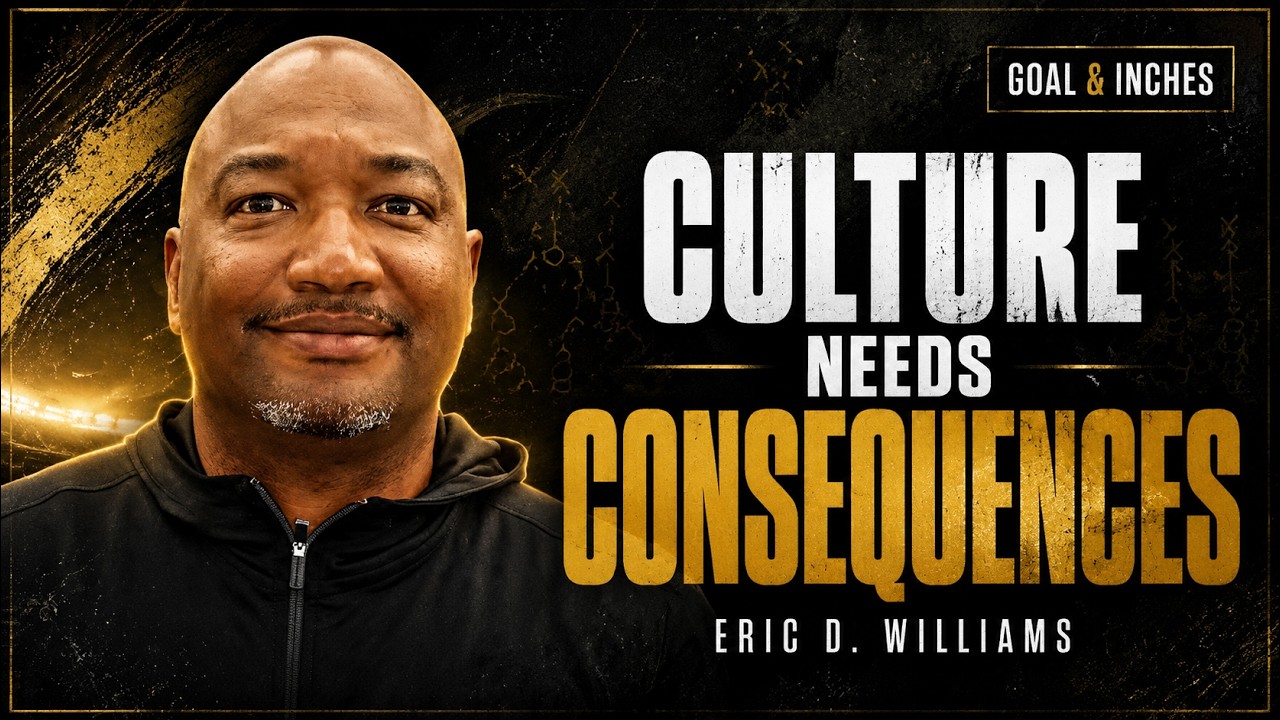
Elite organisations do not become elite on game day. Eric D. Williams of Fox Sports has watched that advantage being built up close, covering the Seattle Seahawks from the start of the Pete Carroll era, the Chargers through their move from San Diego to Los Angeles, and now the Los Angeles Rams. He is also a voter for the Pro Football Hall of Fame.
Eric explains what made Pete Carroll’s optimism an operating discipline, why positive culture still needs consequences, how Sean McVay keeps ordinary practice competitive with his “Mamba period”, and why the Brandon Staley Chargers show that early success can conceal a fragile culture. He also covers how elite teams separate a bad outcome from a bad process, what alignment between owner, general manager, coach and quarterback looks like, and which franchises carry the most pressure into the new season.
The conversation closes with a Melbourne pre-mortem on the Rams and 49ers ahead of the NFL’s first regular-season game in Australia, and the career decision that became Eric’s own Goal & Inches moment.
Key Moments
1:45 – What separates an elite organisation from a team on a good run
3:12 – Pete Carroll, nearly 300 roster moves and practices that made games easy
5:46 – When early success hides a weak culture: the Brandon Staley Chargers
7:31 – How a reporter keeps the narrative from outrunning the evidence
11:18 – Why Pete Carroll’s optimism worked: authentic, positive and backed by consequences
14:00 – Sean McVay’s “Mamba period” and the value of ordinary drills
20:59 – The adversity Anthony Lynn navigated through the Chargers’ move to Los Angeles
28:09 – How one play call tested belief inside the Seahawks
What This Conversation Teaches About Pressure
Elite is visible midweek. Eric sees the difference in ordinary practices: clear structure, attention to detail and an intensity that makes Sunday feel easier.
Positive culture still needs consequences. Pete Carroll’s optimism was authentic, but nearly 300 roster moves in his first year made it clear that anyone who didn’t buy in would not stay.
Alignment makes decisions faster. When owner, general manager, coach and quarterback think the same way, decisions are clearer. When belief is lost, as Eric saw in Seattle, it can be hard to win back.
Judge the process, not just the result. The best organisations self-scout, rotate who evaluates which position group, and stay with a sound process even when results lag.
Know your identity. Teams like the Steelers, Ravens, 49ers and Rams know who they are, which tells them who to recruit, develop and promote when people leave.
Read the full transcript
Elite organizations do not become elite on game day. Their advantage is built far earlier. That's how they practice, how they make decisions, how they respond to inconvenient evidence, and whether their standards survive adversity, turnover, and disappointing results. Eric D. Williams of Fox Sports has observed that process up close across the Seattle Seahawks, the Los Angeles Chargers, and now the Los Angeles Rams. He has watched teams rebuild, contend for championships, and discover that early success was concealing weaknesses beneath the surface. In this conversation, Eric examines what made Pete Carroll's optimism an operating discipline, why positive culture still requires consequences, how Sean McVay makes standards visible, and how elite organizations distinguish a bad outcome from a bad process. We also explore the decision that changed the trajectory of the Seahawks. The Rams appetite for major personnel moves and the contrasting approaches the Rams and the 49ers are taking into the NFL's first regular season game in Australia. Before the scoreboard confirms it, what does Elite actually look like?
This is Goal & Inches, the NFL pressure test. Eric Williams, Fox Sports. Thank you for joining Goal & Inches. Yeah, thanks for having me. I appreciate it. Excellent. Well, diving straight in, I was wondering if I could get all your experience wrapped up into what defines elite. That's the thread of the conversation today. So, if we strip away records, star names, and public narratives, what's the first observable difference between a genuinely elite organization and a talented team just enjoying a successful run? Yeah, I think for me it's culture and how they construct that as a franchise starting from ownership all the way down to front office, coaches, players, and how that kind of trickles down as you get to each one of those levels of an organization. You know, I had a chance to cover, you know, three teams very closely, you know, starting with the Seattle Seahawks and Pete Carroll when he first got there in 2010. Had actually covered the last year of Mike Holmgren and one year of Jim Moore before Pete got there.
And then after that, I covered the Chargers both in San Diego and Los Angeles and I've seen the Rams up close. And so I've had a chance to experience a lot of different types of coaches and how they build programs. And I think for me the ones that have had the most success are the ones that have the most consistent culture where players understand exactly what's expected from them from the top down and then there's alignment both from the front office, the coaching staff and the players and they're able to have that sustainable winning because of that strong culture that's put together. So, diving into what culture means then when there's no crisis forcing people to concentrate or no game day adrenaline lifting the intensity, what does elite look like during an ordinary midweek practice? Yeah, I think for me that was one of the strengths of Pete Carroll and one of the things I was impressed about him was his ability to get focus from players day in and day out, not just on game day.
And because of their consistent way that they practiced, the games were easy for them. The first year I was there, Carroll and the GM, John Schneider, made nearly 300 roster transactions. And so when you see that many guys are spinning through the organization, I think it grabs players attention and they have more focus in terms of what they're going to do day-to-day. So that was one of the things that I think that both Schneider and Carroll did successfully. And then Carroll obviously had his different days where he would focus on different things. You know, a competition Wednesday and different names for the different days. And so that kind of would get guys geared up and ready to practice at a high level. He also played music which was kind of something that you would think would people would have done before that but as a person that played football from the time I was 6 years old till 22 we never had music and practice is boring.
So the fact that you know you have music out there maybe a song comes on that you know that kind of gets you going. I think players obviously took to that and then now you see that throughout football, you know, pro, college, high school, even, you know, little league football. You'll hear music at practice. That's been something that's kind of trickled out throughout football. So, you know, attention to detail, structure obviously is important in terms of being consistent with what you're doing. And I think your approach in terms of intensity level was the last thing I would say. The first couple years that I covered the Seahawks, they had very intense competitive practices that almost turned into fights. John Schneider used to say if we didn't win the game, we want to win the fight afterwards. So there was an intensity level that they needed to compete at in order to have sustained success. And so, I think in any successful organization that I've covered, intensity level in practice has been kind of one of the stalwarts that, they've leaned on.
So, culture can sometimes be used as that catchall phrase. If we look at the other end of the spectrum, has there ever been a time when you've seen strong results conceal the absence of an elite operating system? And if so, what eventually exposes that difference? Yeah. That's a great question. The one example I could think of was Brandon Staley when he took over the Chargers. I think the first couple years they had a lot of success and Brandon Staley is a smart coach. He had coached under Sean McVay. So, he brought a lot of the things that he learned under McVay across town to the Chargers. And I think initially you saw that they were aligned and they were you know, all together. But once they had that 27-point loss in the playoffs to the Jacksonville Jaguars, I felt like they lost belief in the head coach and that was one of the instances where things just kind of went downhill from there. Staley was eventually let go.
And then they ended up hiring Jim Harbaugh who kind of has this no-nonsense, tough as nails approach, kind of an old school Vince Lombardi approach to coaching football. And you've seen the success that the Chargers have had the first two years under Harbaugh. So I think in that instance, you know, maybe Staley's initial success hid the fact that the culture wasn't strong enough and there wasn't enough alignment front office to head coach so that they could have sustainable success over a long period of time that led to Super Bowls. Now, having loved the game since 6 years old and playing it through college and now as a professional journalist, in the minutes following a game, you must separate what you know from what you infer and what still needs to be tested. What's your process for preventing a compelling narrative from outrunning the evidence? Yeah, I think that's a great question. I think as a reporter, we're we're kind of taught to look at the facts and our institutional knowledge, our experience, and what we've been doing and kind of let that guide the process in terms of where the story is going.
And then from there we go to the locker room and either our conversations with the sources within the locker room or other sources that we've developed around the league either confirm what we've seen and observed or they discount that and move in a different direction. So I think as a reporter for me you know I'm watching the game I'm I'm seeing how things are evolving. Maybe there's a certain play that happened where a corner back got beat and I think it's for one reason and then I go and I talk to the players like actually no that wasn't my fault you know that was the other safety's fault that was supposed to have coverage over the top and so that's where you kind of let the players who have the most experience on the field kind of you know let you know what the real story is so you can tell that story to readers and so they're kind of getting the full you know situation of what happened and not just your perspective which could be wrong if you're not answering asking the right questions.
So just out of interest without giving away any names have there been occasions where you found different players had different views and different interpretations as to why it went wrong. Yes, that's happened where I've actually been talking to both players at the same time and there's been like an argument over what the call was and what he thought they were supposed to do and what the coach thought they were supposed to do. So you could have that happen between two players or you could have that happen between a player and a coach where there was a miscommunication and you know player thought one thing and a coach thought another thing and so that leads to interesting copy after a game. If we go back to the first period when you're covering the Seahawks before the victories validated Carroll and Schneider's decisions, what told you they were building something that was durable rather than simply changing personnel, particularly given that 300 number transactions? That's that's a lot.
Yeah, it is a lot of people. I think for me it was the first year when they went seven and nine, but they still reached the postseason. And then they had Beastquake where Marshawn Lynch obviously had that amazing run against the New Orleans Saints that, you know, actually created seismic activity within the stadium, was at the game when that happened. It's it's one of the most iconic runs in the league. And I think for me that created so much belief within that team that you're like, okay, they've got it. Even though they're seven and nine, you know, they went on to beat the Saints in that game, which were the defending Super Bowl champs. The week before that, they had to win a game to get into the postseason and they actually started their backup quarterback Charlie Whitehurst in that game for Matt Hasselbeck and he played well enough for them to win the game at home in order to get into the postseason. So to be seven and nine, get into the postseason, not only reach the postseason, but win a playoff game.
They went to Chicago the next week. Played Chicago tough, but it was like in 14 degree weather, and weren't able were unable to advance. But I think at that moment, you kind of sense that they had something there. The next year, they went seven and nine again with Tarvaris Jackson leading them at quarterback. And then the next year they drafted Russell Wilson and they were kind of off to the races. They had finally found their franchise quarterback to go with that historic defense that Pete Carroll had built. So Pete Carroll's known for his energy and optimism. What made that optimism I guess an operating discipline rather than a personality trait? Well, first of all, I think it's authentic. I think when people see Pete, they maybe think that he's putting on an act or something, but if you talk to Pete off the podium, you're going to get the same guy that you get when you talk to him, you know, in front of reporters.
And that's the same person he was in the locker room. And so I think that's one of the reasons why it worked was is authentic. And then I think also it's something that he strongly believed in that pro that positive approach. Again, as a person that grew up playing football, I never had a coach like Pete. They all coached out of fear. They made you run. They screamed at you. You know, you're kind of berated throughout practice. And there's short-term benefits to negative reinforcement, but I think Pete understood the longer term benefits you could have for positive reinforcement and being optimistic. And so, it worked, but you also have to be able to discipline guys if it, you know, there's something that goes wrong. You can't always be positive. And so we talked about it. 300 roster transactions. If you didn't get on board, the guy was coming to give you a pink slip. And so that was the deterrent they had to not, you know, believing in what was happening in the line.
And if you didn't want to be there, they were ready to show you the door pretty quick. And on a couple different occasions, guys that I would request to talk those first couple years, I would go to talk to them and they would tell me, "Actually, you can't talk to him because that person's been cut." And so, there was a couple instances where I had to kind of, you know, go a different direction and pivot because the guy I had asked to talk to was no longer on the team. So again, you know, he gets your attention. You know, the positive, Pete stuff is real and I think it's effective, although maybe over the longer term it kind of hurt them a little bit after the back-to-back Super Bowl appearances and maybe got a bit stale. But, you know, his ability to get rid of players served as a deterrent for not kind of getting on board. Yeah. In your privileged position, you get to see the full life cycle.
You see the game day action and then parts of the recovery and then you move into midweek practice and earlier talked about consistency. Just want to delve into the grind a little bit more. So across the best players, coaches and organizations that you have observed, which preparation habits are so ordinary that they rarely attract headlines but so important that elite performance could not be sustained without them? Yeah, I think for me the one thing that stood out is Sean McVay's Mamba period, which is something he named after Kobe Bryant, who had the nickname the Mamba because he's one of the most competitive people, you know, ever to play pro sports. And so they had a competitive period in practice midweek where they would go ones against ones to kind of create this competitive atmosphere. And so I think from my perspective, football again is a monotonous drudgery of practice that relies on doing repetitive things over and over. And McVay's ability to take something as mundane as, you know, just 11-on-1 scrimmage and kind of sparked that a little bit created the ability to pump up the intensity level so you get a better practice.
And so again, you know, the details are important. I did something a couple weeks ago on head coach's favorite coaching drills or favorite practice drills and McVay's one was ball security, which is something they do at the beginning of every practice and something they think is important because turnovers can be big determining factors on whether you win or lose and they want to make sure that they're emphasizing their offensive players taking care of the football. So again, that's kind of another example of maybe a mundane drill that you don't think means a whole lot, but for the head coach, he wants to make sure that he's telling players that this is something important that you need to pay attention to. So just out of interest because we hear coaches say iron sharpens iron all the time. When you say the one goes against the one, how often does that happen in reality or is there more a protectionist type mindset to make sure that your best players are available in the next weekend?
Yeah. Yeah, that's a great question. Most times during the regular season, the starters don't go against the starters. The starters will go against a scout team, offense or defense, that's running the plays for the other team, to kind of give them a look on what they're going to see on game days. And it's usually at a lower speed, maybe even at a walkthrough speed because it's more of a teaching period. And so they do that more times than not because the season's so long. You have 17 games now. They're dealing with older players. They want to make sure that they're trying to take care of those guys as much as they can throughout the week and not getting after him as much. However, you know, again, on those occasions where, you know, they have a mamba period, they tell those guys to strap their helmets up. You know, they're going to go full go. They usually don't go live where they're tackling guys to the ground, but they'll go thud tempo where they're hitting but they're still trying to keep guys up because again, they want to avoid injury.
You recently ranked the NFL players facing the most pressure heading into the new season. Can we take a different lens and look at the franchises? Which franchises are under the most pressure heading into the new season and why? Great question. Haven't had too much time to think about it, but off the top of my head, I would say Philadelphia because of the changes that they've made both with AJ Brown getting traded to New England, which had, you know, kind of been a sore spot in terms of, you know, the franchise. So they moved on from a player that didn't necessarily want to be there. They have a new offense coordinator and Sean Mannion. So, Jalen Hurts is going to have to learn yet another offense. So I think there's there's pressure on, Jalen Hurts and Nick Sirianni to show that they could get back to the Super Bowl with a new cast of players and also with a new offensive coordinator and AJ Brown, their best receiver on another team.
So, I would go Hurts and then I also would point to Lamar Jackson and the Baltimore Ravens. Lamar Jackson basically got the franchise to move on from John Harbaugh. I mean, they fired one of the best coaches in the league, brought in Jesse Minter, who was serving as a defensive coordinator for the Chargers. He's now a younger coach that maybe can better relate to younger players. That's another thing I probably didn't talk about enough is you're seeing a trend towards younger head coaches in the league. And in talking to sources around the league, I think they want younger coaches that are more closely in age to these younger players that can relate to them and create more connectivity with these younger players in terms of where they're at in their life. So, with Lamar, he gets a new coach. He's also playing for a new contract. He wants to be the highest paid player in the league right now. That's Patrick Mahomes, two-time MVP. He has not won a Super Bowl, you know, which we're kind of looking like, are you ever going to get to a Super Bowl.
So there's a lot of pressure on Lamar to perform. He also has a new offensive coordinator and Declan Doyle who was with Chicago Bears. We know the success that they've had on offense there with their new head coach. And so, that's another franchise where the expectations are immense. They haven't necessarily met expectations for a long period of time, but I think people nationally expect for them to be in the Super Bowl this year. Across the teams you've covered, what's the earliest observable sign that standards are strengthening or beginning to slip before the win loss record catches up? I think for me having been to five or six different camps, I would point to the Chargers and I would say that because of the addition of Mike McDaniel as their offensive coordinator, which I think might be one of the most important additions to the league. You can sense an energy there, and an urgency there that they need to take advantage of this opportunity of having one of the best offensive minds now, you know, guiding them offensively.
And not only one of the best offensive minds, they have one of the best physical tool sets in terms of Justin Herbert at quarterback and now he's going to be coached by one of his probably the best offensive mind that he's ever had guiding him. So, he made a lot of plays when I've watched him both in joint practices with the 49ers and in a little bit of preseason that we seen him. So I think in terms of, you know, watching those guys on a daily basis in practice and the expectation level of what they're going to do, you know, once the season starts, I could see them, you know, being on an upward trajectory, even though, you know, Harbaugh has finished 11 and six the first two seasons that he's been there. He hasn't won a playoff game yet. So, again, I think the expectations not only for the team, but for the head coach, the offensive coordinator, and Justin Herbert, who also is 0-3 in the postseason, he probably should be under pressure, too.
I should put him on that list. But yeah, I think I would point to that team. Looking at the conditions for success. So when you cover the Chargers through their coaching changes and their relocation from San Diego to Los Angeles, what did that period reveal about how organizational uncertainty affects people who are still expected to perform every Sunday? Yeah. I think it revealed a lot. You know, they hired Anthony Lynn right before they moved to LA. And so he had to deal with that move initially, which was moving into, you know, a temporary stadium in Carson. It only seated 25,000 people. And a lot of times there were more opposing fans in that stadium than home fans. So it was almost like they're playing in an away game for the three years that they were in Carson. So that's tough, you know, when you get to deal with as a coach and a player when you don't really have that home field advantage. They were in a temporary facility in Costa Mesa in Orange County for several years before they moved to their current facility in El Segundo, which is really nice.
And so you're having to deal with that prospect of being in a place that's not really built for an NFL team in terms of the standards. He had to deal with COVID, you know which was obviously a tough thing to have to kind of push through you know he had to deal with a change in terms of his quarterback you know going from Philip Rivers to Justin Herbert at the end of his tenure there went nine and seven and just missed the playoffs his first year there and then had a really impressive season the second season they were able to get to the playoffs, win a game at Baltimore, and then lost to the Patriots in a cold game. So I think Anthony doesn't get enough credit for all the adversity he had to deal both with just a franchise moving cities even though it was a short distance. You know, San Diego, LA is much different in terms of market. He had to deal with you know the difference in players different kind of players that he's working with facility you know coaching staff and the changes there and then I think the lastly I don't think there was an alignment necessarily between front office and coaching staff at times so maybe there was some back and forth there that he had to deal with and work through.
And I think all of those things, you know, lead to eventually, you know, Anthony Lynn not being there and then moving on and hiring another coach. So, if we delve a little bit more into that alignment and accountability aspect, how do elite leaders make it possible for that inconvenient information, the disagreement, bad news are traveling throughout the organization without weakening confidence or lowering performance expectations? Yeah, I think elite leaders are good at kind of nipping that in the bud and making sure that everybody understands, you know, what the goals and the criteria are for success, you know, starting again with the front office, obviously with the coaching staff and what he's saying there and then the players themselves. And so all that stuff kind of has to be echoed up and down the chain so everybody understands what the two or three big goals are that they're trying to accomplish. And so again, it's communication I think is the main thing. And really overcommunication. So again, like I talked about when you know, I went in the locker room and you know, one player was saying one thing and one player was saying another thing about you know, the call and what was expected.
You don't want anybody to not understand and have clarity about you know what the goals are and what they're trying to accomplish on a daily basis. I mean you obviously coaches have their philosophies and things that they kind of hang their hat on. You know again with Harbaugh it's it's toughness I think. With you know McVay it's connectivity. You know with Pete it was positivity or being optimistic was important. And I think along with that, one of the things that Pete hung his hat on was grit. You know, he wanted players that have kind of went through some stuff and were resilient. You know, Richard Sherman was a great example of that. He was a fifth round pick. He was benched at Stanford, moved from receiver to the defensive side of the ball so he could, you know, get onto the field. And then when he came to the Seahawks, he kind of had to fight his way to a starting spot, but, you know, went to the point where he was an All-Pro and now he's, you know, a person that's that's on the ballot for the Pro Football Hall of Fame this year because of what he was able to accomplish as a player.
So I would say grit again is another thing when you look back at those Pete Carroll days was something that they hung their hat on and something that they looked at as from an organizational standpoint in bringing players in. Now, sitting in those weekly postgame presses, following a significant defeat, which behaviors or language, tell you that accountability is real rather than something being performed for the media? Yeah. It's a great question. I think again you want to look for authenticity. Are they are the guys owning, you know, what happened on the field or are they blaming others? And then I think also, you know, the film doesn't lie. And so the guys are going to go back and watch their performance and see what happened and again take ownership for it and try to fix those things. But right after a game, I think you want to hear accountability from the head coach starts with him and then down the line from the players about, you know, what happened about, you know, with the loss and why they lost and kind of owning, you know, the result in the field.
And one of the coaches that I think is extremely good at that is McVay. Whenever you hear him talk after a loss, he falls on the sword. He's like, "It's my fault. You know, I didn't do well enough as a coach. These are the reasons why." you know, it wasn't on them. I didn't prepare them well enough. And I think that's great because players follow suit. If they see that their head coach is doing that, then they're they're going to mimic that behavior. You know once we get in the locker room and are able to speak to them. You've talked a number of times about the importance of alignment. So when the head coach and general manager and quarterback are genuinely aligned, what becomes clearer or faster inside the organization and is there any early warning signs that alignment might be beginning to erode? Yeah. Good question. I think it's the decision-making is faster and clear when everybody is aligned because they're all thinking the same thing.
You know, from GM all the way down to, you know, the head coach and the quarterback and you know, the foundational players on a team. But I think the Seahawks are a great example of how that can go wrong. You know that Russell Wilson interception at the end of the game where they should have won and they didn't hand the ball to Marshawn that really was the beginning of the end of that dynasty. They were just never able to recover from that because Carroll lost trust from his foundational players because he didn't do what he didn't lean on his own philosophy, you know, in terms of, you know, Marshawn is my guy on the one yard line. It's only one yard. Why didn't I do the simple thing and hand the ball off to him? And so because, you know, it went down the way it did, I think you saw it over the next year or two. You know, other guys started to leave.
You know, Marshawn eventually moved on and played for the Raiders. Richard Sherman eventually moved on and played for the 49ers. That team started to break up because you didn't have that belief that you need to win at an elite level in the organization after that one play. So that's a fascinating and great example. Is there one where the plans failed? So the original game plan stops working whether it's an individual game or a season. What does an elite team fall back on? And is there an example you can point to you can see the bounce back even though they've had a dip for whatever that reason might have been? Yeah, I think there's been a number of teams that have kind of struggled at times but have kind of bounced back. I guess I would talk about Kyle Shanahan and what's going on in San Francisco because I really feel like that's one of the most resilient organizations in the NFL and you've seen it.
There's been times where they've really started off slow. He had one and four starts or two and four starts. But because of the belief in the coach and the players, they've been able to kind of turn things around in the second half of the season. Even last year where they experienced a lot of injuries and maybe there wasn't high expectations that are normally there. They were still, you know, in the playoffs at the end of the year playing younger players on defense and still kind of trying to get the most out of older players on offense. So I think in sense of schematics they had to shift defensively because Nick Bosa wasn't playing, Fred Warner wasn't playing. So they had to simplify things in order to go out there and play fast and be able to do make enough plays to give their offense a chance to kind of carry them. They also had to play without Brock Purdy for several games and so they had a backup quarterback in Mac Jones come in.
Mac has a different skill set than Brock, so they had to kind of change the offense to kind of fit what he does well. So again, Kyle Shanahan's ability to kind of, you know, switch gears and change things based on his personnel and still keep his team competitive, I think is commendable. So if we explore that example a bit little bit further over the last decade with Lynch and Shanahan. So they've still had a couple of down seasons even though injuries have been pretty common throughout. How does an elite organization distinguish a bad outcome from a bad process and when they make that change in direction? Yeah, that's a tough question and it's an interesting question because we're talking about a league that's a results, you know, oriented league. Either you win or you lose and if you don't win enough games, you're you're out of there. You're getting fired pretty quickly. Like there isn't a long leash in terms of, you know, head coaches and their ability to withstand, you know, tough situations.
All you have to do is, you know, look at Arizona and how much they've gotten rid of head coaches over the last decade. So there's not a lot of patience there. One thing I can say about the league is there's a lot of self-scouting, which is important. And I when you talk about bad process, they're always looking at their process throughout the regular season to see if they're missing anything. And one of the ways that they do it is they have different coaches from different positions look at the other coach's position group. So they have a new set of eyes looking at and evaluating things to see if there's something that maybe they're missing. It's the same with the front office and the scouts. You know, you might have a scout that's designated to a certain team or a certain area to scout players. They'll switch those scouts to have them look at something different and kind of back check the work that a previous person has done again to get another set of eyes and to kind of check those processes to make sure that they're staying on task and doing the things that, you know, they've said that they're going to do in terms of player evaluations and how players are being coached.
And then I think lastly, one thing that's not talked about enough in the league in terms of process is player development. I think the best, staffs and teams have experienced coaching staffs that are able to develop players and get them to perform at their maximum level. I know when I covered the Seahawks, that was one of Carroll's coaching staff strengths. And again, you look at players that were late-round picks that went on to have productive careers, you know, like Kam Chancellor, you know, Richard Sherman, Russell Wilson was a third round pick. So those are kind of examples where organizations are making sure that they're they're checking their processes and that they're being consistent with it. And then I think sometimes, you know, you can have a good process and you're just not getting the results that you want. But that you have to kind of stay with it and be resilient with that process and give it a longer time to work for you. What I find fascinating is just the high level of coaching turnover, not just head coach but right throughout the coaching ranks makes it I guess in a business perspective, your playbook and your IP is very hard to protect.
So everyone sort of has a good insight into what you're doing. If an organization's culture is real, how is the standard maintained through injuries or roster turnover and coaching departures? How do you know which elite organizations can sustain their culture through those periods? I think you just have to look at the standings. Because a lot of the times you're seeing the same teams year after year have success and we've been talking about them, you know, whether it's the Rams, the 49ers, you know, the Seahawks when Carroll was there. The Cowboys, even though, you know, people are not happy that they haven't made any deep postseason runs, they're usually, you know, double digit winning teams. Green Bay, again, is another franchise that has a lot of success. And so, I think with those types of franchises, Pittsburgh, you could point to that run that Mike Tomlin has had, they have an identity. They know who they are, not only as an organization in terms of what type of players they're looking for, but they know how they're going to operate on offense.
They know how they're going to operate on defense. And it really hasn't changed for, you know, decades when you talk about Pittsburgh or the Ravens. You know, the Ravens have always been kind of known as a tough-nosed defensive team. Same with, you know, the Steelers. Seahawks, they're known as a defensive team. I think if you look at the 49ers is probably more of their offense because Kyle Shanahan is their coach who's more of an offensive-minded head coach. Same with the Rams obviously with Matthew Stafford. So, I think you're you're looking for definable characteristics that don't change over time. That allows the franchise to deeply understand their identity, their culture, what they're looking for when they're going to bring people into their organization. And so when they make changes to their staff, they know what kind of people they're looking for to replace, you know, other people. I think again, you know, look at Sean McVay. He lost Mike LaFleur to the Arizona Cardinals, who's now their head coach.
Nate Scheelhaase, who I'm actually writing a story on, has replaced him as the offensive coordinator. He got Nate Scheelhaase a couple years ago from Iowa State, you know, because Matt Campbell recommended him. You know, Matt Campbell's now the head coach at Penn State. And so, they're always talking to coaches, you know, not only around the league in the NFL, but in college, looking for eventual replacements should they need to replace people not only on the coaching staff, but obviously players as well. The Rams are a fascinating case study. I've got a Jared Verse signed Rams helmet behind me. What separates the Rams discipline conviction from reckless ambition when they place a major personnel bet? I think for them they value winning at any cost, which I think if you're a fan of the Rams, you have to love that it's important for them. So they're willing to give up picks for players because they just want to get the best people possible in position. So, if it makes sense for them to give up those picks, you know, they'll do that.
You mentioned Jared Verse. I think that was the first round pick they've had since Jared Goff was there, you know, nearly a decade ago. So, you know, it's something they've done, you know, throughout their history, whether it was, you know, Jalen Ramsey bringing him in, you know, Von Miller, you know, Brandin Cooks, I believe, was another trade that they made. So, they've they've done it over time and it's been successful for them. Matthew Stafford, obviously, Matthew Stafford helped them win a Super Bowl. So it's it's a philosophy, you know, of their organization. They don't care how they get the players. They just want to get them. And I think the other thing I would add to it is, they're kind of forced to do that because of the market that they play in. People care about the Dodgers and the Lakers in Los Angeles. The Rams are a distant third on that list. So, in order to be competitive in the market, which is an ultra competitive sports market, they have to give fans a reason to go to the stadium.
You live in Southern California, there's a million things to do other than sit inside a warm stadium and watch football. You know, you can go to the beach, you can go skiing, you can go hiking, there's a lot of other activities that you can do. And so, you know, it's Hollywood. You know, it's the land of the stars. And so I think when you we consider you know Kevin Demoff, their COO, and Les Snead, they all understand that they need kind of those larger than life players and certainly Myles Garrett is that in order to attract fans. And again you mentioned teams with the most pressure. I can't believe I didn't lead with the Rams. I mean they're the heavy favorite to win the Super Bowl. They certainly have a lot of pressure because of all the moves they've made this offseason. I'm keen for your insights on judging enduring greatness, particularly given you have a role in voting on the Hall of Fame candidates.
What evidence separates an exceptional period from enduring greatness? And does that same test apply to organizations as well as Hall of Fame candidates? Yeah, that's a great question. You know, a lot of people ask me like, you know, what do I weigh and what's important to me? I think for me and considering you know people for the Hall of Fame, you want to see sustained elite success. So I think you're looking for a three four-year period where that player was the best player at their position. You know certainly like you consider somebody like Adrian Peterson who ran for 2,000 yards. You know you could look at his resume and go yeah there was a three or four year period where you know Adrian Peterson was the best running back in the league. You know I believe he was an all decade list person and so I think using that evaluation you could do the same thing with a franchise obviously the gold standard is what the Patriots have done with Bill Belichick who again I can't believe he didn't get last year but you know he didn't you know what he was able to accomplish during his time at New England was unprecedented you know nobody has ever came close to doing that as a head coach and I don't know if they ever will.
So, you know, that's kind of again the example that you would use. You know, there's there's been other head coaches that have had you know, some success and being able to win Super Bowls. Obviously, Pete Carroll went to back-to-back Super Bowls and won one. But nobody has had the sustained success in winning that, you know, Belichick has had. So, Australia's very excited. We have our first regular season game only two and a half weeks away. Let's just conduct a Melbourne premortem. If the Rams won, what happened and what failed the 49ers pressure test? If the Rams win, Matthew Stafford didn't get hurt, so his back came through. Okay. And I'm going to say that Davante Adams will have had a good game. He's he's he's been playing pretty well both in the joint practices and the games that or excuse me, the practices that I've watched. So, with Puka still kind of, you know, a little bit banged up, not sure, you know, exactly, you know, what kind of shape he's going to be in.
I think Davante is going to have to step up and lead them offensively in terms of the passing game. So Stafford's going to have to play well. They're going to have to score points offensively. And again, they're going to have to take care of the football. I mentioned, you know, the turnover drills and protecting the football as a point of emphasis for the Rams. They've been top 10 in terms of taking care of the football the last two years. So I think it's going to be important that they play mistake-free football against you know a pretty good defense in the 49ers that has you know Fred Warner healthy and I think they're hoping to get Bosa back as well. Excellent. I think you've already answered it but let's just turn that question the other way around and if the 49ers have won what did that result expose about the Rams? Their inability to stop the run. You know, McCaffrey, I believe, is going to be healthy.
I think, you know, Shanahan wants to run the football to trying to control the clock and play keep away from Stafford in that explosive offense for the Rams. So, if the 49ers are able to dictate tempo, control the line of scrimmage, McCaffrey has a good game, then I think the Rams could be in trouble because it is an area where they struggle a little bit. We don't know if Aaron Donald's going to be back yet. You know, we keep kind of waiting and waiting. You know, I think, you know, people I talked to, they said closer to September before he would make a decision. So, you know, we'll see if that's going to happen in the next week or so. But even if he does come back, I don't know if he's going to be available for this game. And at times the Rams have struggled stopping the run, particularly if you think about games against, you know, Philadelphia last year. So, McCaffrey, I think, is going to be a key, part of this game if he's healthy.
How much, or credence do you put into the fact that they're adopting two different approaches in terms of arrival time? So, the 49ers are coming in early and the Rams well, it's not formally understood, but appears to be a very short runway before the game's being played. Yeah, I don't even know if the Rams are checking into a hotel, aren't they? Just going straight to the stadium to play. That's that's how McVay operates. Even he's always done that. You know, they go back to the East Coast, they're there Saturday, they check in for a day, they play the game, and they hop on a plane and get back. McVay believes in keeping things as normal as he would have them if you were back in Los Angeles. He wants as little change as possible where it sounds like Shanahan wants to get there and kind of adapt to the surroundings a little bit and that's why they're going to get there a little earlier. Whatever works best for the team, you know, I think is what they should do.
So, you know, McVay's way of doing things has been successful for them when you look at, you know, their record on the road and what they've been able to do and the same with Shanahan. So, I don't think you can really argue with either approach. They're both effective for the respective teams. Eric, one final question if I may. This podcast is titled Goal & Inches. So, we're intending to reflect on moments where the margin for error is really small. Looking across your football and reporting career, what has been your own Goal & Inches moment? That occasion where the years of preparation met a very narrow margin and materially changed what came next? I will say my decision to go to ESPN and cover the Chargers. For me, I always my goal was to work for my hometown paper and cover a professional team, whether it was, you know, the Seahawks, the Sonics, the Mariners, or you know, the Washington Huskies, which is a popular team in that area.
And so once I got to the point where I was working for my hometown paper and covering the Seahawks, I felt like I was happy I could stay there and retire. But then ESPN came calling and offered a job to cover, you know, the Chargers in San Diego, a place where, you know, my wife always wanted to live and retire. And initially, I wasn't going to take the job. You know, I was just going to stay where I was. And my wife smartly pushed back on that decision and ultimately, you know, I weighed it and made a tough decision of leaving home and moved to San Diego. I've been here 14 years now. I wake up every day at 75 degrees, no rain. That's like the Pacific Northwest. It's a pretty good life. So, I think I made a good decision. Oh, that's perfect. Great way to end. Eric Williams, thank you so much for joining Goal & Inches. Sure, no problem. Thanks for having me.
Enjoyed the conversation. Perhaps the clearest lesson from that conversation is that elite performance becomes visible long before the final result. It is visible in the intensity of an ordinary practice, the clarity surrounding what is expected, the willingness to challenge an attractive explanation, and the discipline to examine the process before reacting to the outcome. Positive culture still requires consequences. Alignment must make decisions clearer and faster. And if an organization's identity is real, it should determine who is recruited, developed, and trusted to carry the standard forward. Those are the operating disciplines that determine whether performance will hold when the pressure arrives. My thanks to Eric for sharing his perspective, one that he's developed across the Seahawks, Chargers, Rams, and the wider NFL. If you found value in this conversation, subscribe to Goal & Inches for more discussions around preparation, leadership, culture, and decision-making when the margins for error are really small. I'm Andrew Johnson. This is Goal & Inches, the NFL pressure test.
More Pressure Tests
Episodes