
Yes, I can get hit and I can be put on my backside, but I’ll get back up and I’ll just do the job.
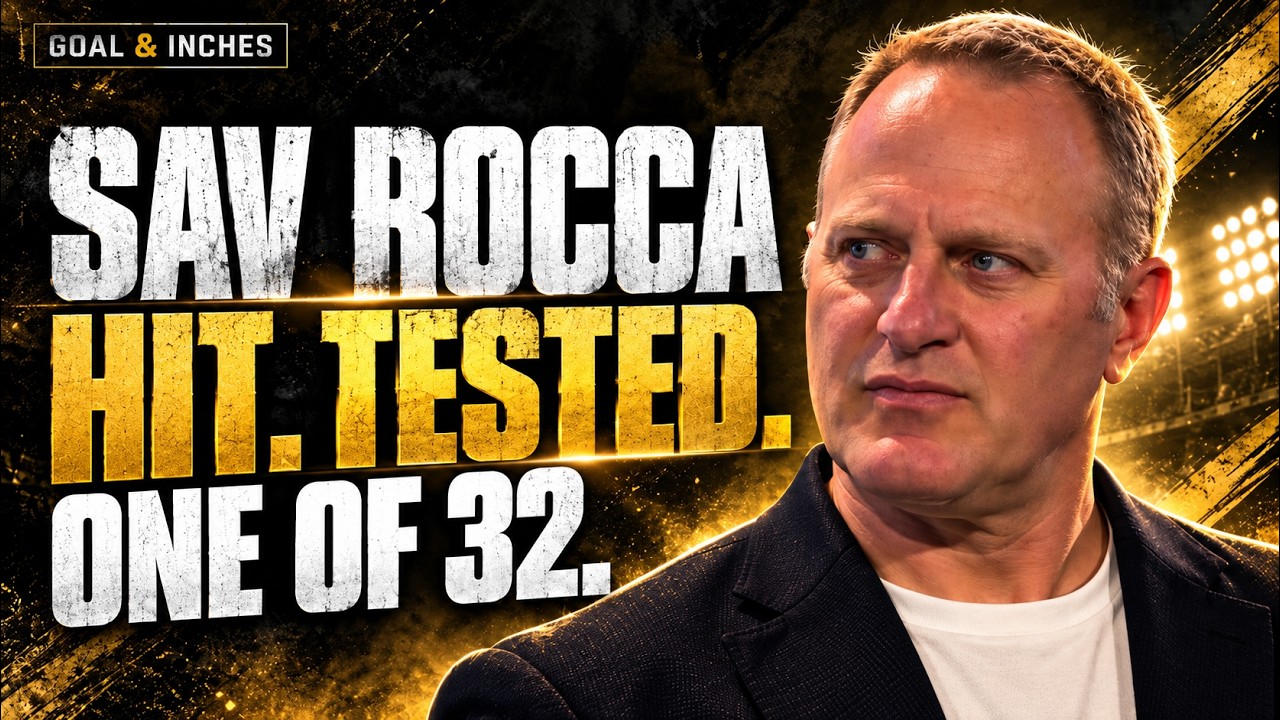
Sav Rocca was already one of the great long kickers in AFL history when he started again. After 257 games and 748 goals with Collingwood and North Melbourne, he arrived in Philadelphia at 33 with no college football background and set out to win one of only 32 punting jobs in the world. He found out the week before the season that he had made the Eagles roster.
What followed was a serious second career: seven NFL seasons with the Philadelphia Eagles and Washington, 112 regular-season games without missing one, 517 punts and more than 22,000 punting yards. Sav goes inside the craft most fans never see, from getting a punt away in 1.3 seconds and holding for David Akers to managing long gaps between moments, and recalls the 2008 NFC Championship Game, when he and Ben Graham stood on opposite sidelines knowing one Australian would reach the Super Bowl.
He also shares what Andy Reid, Brian Dawkins and a Washington coaching room featuring Kyle Shanahan and Sean McVay taught him about preparation and pressure, and why getting knocked down on his first NFL punt became the defining moment of his career.
Key Moments
2:51 – From AFL great to an NFL opportunity at 33
4:53 – Arriving seven weeks early to earn the Eagles job
6:16 – Knocked down on his first NFL punt, and getting back up
9:28 – Why cheering along made for his worst punting games
13:27 – Holding, operation time and the half-second that matters
16:21 – Why the right punt for the team beats the longest punt
23:08 – The NFC Championship Game against Ben Graham
26:26 – What David Akers, Brian Dawkins and Andy Reid taught him about preparation
30:12 – Inside the Washington coaching room with Kyle Shanahan and Sean McVay
What This Conversation Teaches About Pressure
Arrive early and earn it. Sav turned up seven weeks before he was needed, worked daily with the snapper and kicker, and had a head start before the incumbent punter even arrived.
Manage your own state, not the game’s. His worst punting days came when he rode the emotion of every play. Staying level on the sideline, with mental reps and full-power kicks into the net, kept him ready for the one moment that counted.
Deliver what the team needs, not what flatters you. The best punt was not always the longest. Against a dangerous returner, the right ball might be shorter, higher or out of bounds.
Mastery lives in invisible detail. As a holder he had about half a second to place the ball at the right lean, adjust for the wind and turn the laces. Nobody notices until it goes wrong.
Get back up and do the job. Knocked down on his first NFL punt, he kept punting well. Years later he played on with torn ankle ligaments rather than give up his place.
Read the full transcript
I think that was a defining moment in my career knowing that yes, I can get hit and I can be put on my backside, but I'll get back up and I'll just do the job regardless of what it was. Welcome to Goal & Inches, the NFL pressure test. I'm Andrew Johnson and my guest today is Sav Rocca. In Australia, Sav is already known as one of the great long kickers in AFL history. He played 257 AFL games with the Collingwood Magpies and the North Melbourne Kangaroos. He kicked 748 goals, became a Collingwood Hall of Famer, and built a career most footballers would be proud to call complete. But then he started again. At 33, Sav went to the United States and tried to win one of only 32 punting jobs in the NFL. He arrived in Philadelphia without any college background. He had to compete for the role and only found out the week before the season started he had made the team. What followed was not a short trial.
It became a serious second professional career. Seven NFL seasons, 112 regular season games, 517 punts, and more than 22,000 punting yards. And a postseason punting average even higher than his regular season. In this conversation, Sav takes us inside what it felt like to earn credibility in the NFL, how David Akers helped him understand the specialist craft, what Brian Dawkins showed him about intensity, and what Andy Reid's pressure looked like on the practice field. We also discussed the 2008 NFC Championship game against Arizona, where Sav and Ben Graham stood on opposite sidelines knowing one Australian would reach the Super Bowl. At the heart of this episode is a simple question. What does it take to get hit, be tested, and still do the job? This is Sav Rocca on Goal & Inches. Sav Rocca, thank you for joining Goal & Inches. No, thanks for having me on. Just want to establish the legacy. So, from the NFL lens, when you look back at seven NFL seasons, there was 112 regular season games and more than 22,000 punting yards.
What do you think people in Australia most miss about the scale of that achievement? Well, I don't know if a lot of people understand the scale of getting over there and playing in the NFL. So, a lot of those stats they wouldn't necessarily recognize. Yeah, they see 112 games spread out over seven seasons, but you know, when you talk about yards, you know, in punting terms, I don't know if they totally across it, but you know, it's something that I've done and achieved and very proud of. So, before you joined the NFL, you'd already played 257 AFL games and kicked 748 goals. What made you believe that this was a serious second career? Well, I knew that, you know, from the likes of Darren Bennett going over and Ben Graham, I knew that I could kick it, you know, pretty much similar to what those guys could. And, you know, I just had the confidence in myself that once my AFL career was over that I certainly wanted to give it a go.
I'm a very competitive guy and just wanted to test myself to see if I could get over there and make it. And so being competitive and already being an established professional athlete, landing in Philadelphia, you had to win one of 32 punting jobs in the world. How humbling was it to start again at the bottom of a new sport? Yeah, that's certainly different. You know, winning that role cuz I had to I got over there in April and had to compete for my job for the next four months up until or 5 months up until September. And then only got notified the week before the season that I'd had I'd had won the job. But to be one of 32 at that time was, you know, you don't really put in perspective, but now looking back, you think, wow, there's only 32 guys in the whole world that do this. And now looking back thinking, yes, that was a great achievement. So going back and then and being a rookie at the age of 33 was certainly a little bit different.
I'd you know had an established career here in the AFL and then going over there lining up for food and then guys you know cutting in line because they were veterans and I wasn't. So it was like, "Yeah, but I'm like 8 years older than you and you know, it's like a little bit, you know, awkward circumstances, but I just took it with a grain of salt and just went with the flow. That's how they do it. That's how I'll do it." So it was, it was all you know, very big learnings at that time. And so apart from queuing up for the food, when you first landed in the US, you'll be two months without your family. You're competing against an incumbent and no guarantees that you'll make the roster. What did that period reveal about how badly you wanted it? Well, when I first got there, it was around April 17 to 19 when they actually their training sessions first started. And when I got there and knocked on the door, they said, "What are you doing here?" And I said, "I'm ready to train." Whereas they only wanted me there really for the OTAs, which were in, you know, late May.
So, I was there like seven weeks beforehand. And I really got to work with the long snapper and the kicker David Akers at the time and got a lot of time with them without the other punter even being there. So I got a lot of time there. And I just worked my ass off. I just was there every day. I was there, you know, I didn't have any distractions. It was hard not having family, my wife and my kids there, but I just thought if I really want to make this work, I just got to knuckle down and get to work. So it was, you know, in the gym every day, every other day and punting three times a week and, you know, making sure you diet and food and sleep and stretching and yoga and everything was just on track just to make sure that I could, you know, give everything I can to secure that job. So you win the job. Take us back to your NFL debut was against Green Bay in 2007.
Seven punts and a 16–13 loss. What do you remember most clearly about becoming an NFL player that day? Well, I think that was my first game of the regular season. I had my first punt in a pre-season game. I was knocked on my backside. I punted the ball out to the right and I remember just watching where that ball went and I'm not screaming down the field but you know had some fair pace and the returner has switched right across the field. So now I've gone from right to left and the return is maybe 30 m away and as I'm you know approaching that sort of 30 m away I get a clip from the left hand side and puts me helmet off on my backside and like it was like didn't knock me out or anything and I get to the sideline and the coach said what are you doing you got to keep your head on a swivel and I just thought well AFL we're never taught to keep our head on a swivel we just trying to keep our eyes on the ball and the guy and just go hard at it.
But, luckily for me, it was still okay. I had another five punts after that and still punted really well. But that is the most vivid memory that I have of my first punt in the NFL. And in that first season, was there a specific moment where you thought I actually belong in this league? Well it was knowing what I was going up against with Dirk Johnson who was the punter at the Eagles at the time and I would go back and chart all my punts throughout the preseason and I knew that he was a good punter and but I would go back and chart all his punts and I would chart all my punts and at that time I just knew at every session I'd go and I'd look at the numbers and I'd go, "Yep, I won that session." And there were, you know, apart from, you know, maybe one or two sessions where I didn't probably punt so well. I just at, you know, that whole through process, I just knew that I had what it takes to be in the NFL.
So, let's just focus on the craft of punting for a few moments. You have said a punter needs a strong leg, but also the ability to translate power into two steps. Yes. What does that mean technically? Well, so we've got to get that ball off within, you know, 1.25 to 1.35 seconds. The more steps you take, the harder it is to get it in that time frame. So, you want to be able to transfer all of your power into two steps, maybe two steps with a jab, so that you can obviously get the furthest and highest ball that you can possibly hit. So, anything longer than that takes, you know, any more steps takes too long. Any short step, any shorter steps, like off a one step, it's very hard to still transfer all your weight and all power through that. So, two steps, two steps in a jab is generally the ideal area where you want to keep it at. You come through a sport where you're constantly involved in the play into a role where you might only touch the ball for a few seconds across an entire game.
How hard was that transition for you? That was probably the hardest bit is to keep your mind relaxed through maybe an hour or two of not having, you know, any time on the field. And it was a big learning curve and it took me probably a good 8 to 9 weeks where you know I had to really find what really worked best for me and that was being on the sideline mental reps also reps into the net you know figuring all that out. You know, there were games where I thought, you know, I'm just going to go with the flow and get excited. You know, when, you know, the defense or the offense, you know, do really well. And I just found that was pretty much my worst game when I'm there cheering on those guys. It was my worst game that I had punting wise because my emotional state was up and down, up and down with the play of what was happening as opposed to really just learning and just focusing on what I had to do on the sideline to make sure that every punt was the best for me.
So yeah, whether I was punting once or twice, people think, well, you didn't have a really big day today. You only punted once. Yeah, but I only punted once, but every time the offense is out there, I'm having between 10 to 20 reps in the net at full kicks. So, regardless of how many punts I had on the field, I would have approximately on average about 200 punts into the net on game day. So, and they're not, you know, like AFL where you might hit a 20 m kick or a 40 m kick. So, you're only using 50% or 60% of your power. I'm kicking 100% power into the net for about 200 kicks. And you know, if you're not in tune to that, you know, it's another thing that I had to learn to make sure that I was fit enough because guys think you don't need to be fit. No. Well, my back needs to be fit. My hip flexors need to be loose.
Everything needs to be in tune so that you know you're able to perform at your best even though it might only be for one punt. So, does that mean there's really no difference in the level of exhaustion game to game? Doesn't really matter how many times you get on the field because you're doing that volume at that intensity. Exactly. The only thing that changes is the pressure, the amount of time that you go for the pressure side of it on the field that accounts for. So that's the only thing that pretty much changes, but the physical part of it does not really change unless you know unless you're covering a lot of the field. But for a punter, it's not overly a lot. So that's the game day preparation. How should people understand the hidden workload behind a punter's few public moments throughout the week? Also pre-season and OTAs, but generally through a season. What does that Monday to Friday look like? So, we generally play on a Sunday.
Monday, like our coach, I had Andy Reid when I was at the Eagles. So, our Monday and Tuesday were off if we had a win. If we had a loss, we'd be in on Monday. So, and Monday would just be just a recovery, watch film. Tuesday was completely off. Wednesday was a full day, a big day where we would punt and do the whole scenario of things. Thursday was another big day where occasionally punt depending on it was more punt return. So I would punt in the likes of you know being the other punter from who we're going to line up against for that following week so that our punt returners could catch balls. And Friday was a lighter day of punting as well. Saturday mornings would only be a walk through, but every weekend come Saturday, we'd either be at the team hotel in where you lived or you'd be traveling to the hotel of where you were going to play. So, every weekend for that 16 weeks of the year I was gone.
So, punting is obviously very public high profile. The pressure is on. The invisible part of generally the punter's role is holding. And it only becomes apparent when something goes wrong. Yes. How much did you have to learn about holding and the operation time and the specialist rhythm to keep that job? It was really important because they needed to know that I could do it and that six or seven weeks that I got there early, it was a great time for me to practice with the kicker and the snapper. So I knew that catching the ball I was fine with cuz it was coming back to roughly the area. My hands were good in the AFL and it just transferred into the NFL with that ball slung back, you know, eight yards away. But the thing that I had to learn was you would think that you would just catch it and put it on that spot where they want it, but to be able to do that, I mean, the kicker has to get the ball off in, you know, 1.3 seconds.
So the time that I've got the ball in my hand is probably only half a second from catch to put it down and where he kicks it and he wants it at a particular lean that ball. So it's a slight lean to me, slight lean forward now. Yeah, fair enough. We can do that. But if that's off, you know, a couple of degrees, he knows and he's kicking that ball and he would say, "Oh, too much lean." And I think, "Oh, that just felt like the same as the one before." So it's it's it was a really big learning curve. And then what comes with that is okay, this is our basic lean and our lean that we want every time. But if that wind is blowing more left to right, we need a little bit extra lean. Or if the wind is blowing more right to left, we need a little bit less. And you know, into the wind, we'd lean the ball forward a little bit more.
So there was, you know, if we felt if I felt wind gusting as he's about to kick, that lean would have to change in game. So people just think, "Yeah, okay, set, catch the ball, put it down, and the rest of it's his problem." But if he misses it, we're evaluating why he missed it and is it my fault or is it his fault sort of thing. So there's always an outcome with it and the technicality of how do you get the laces out? The laces are generally if a snapper is really good, he can give you the laces at the same spot every time. Sometimes they're not and you have to make the adjustments. So, as you catch that ball and you're bringing it down, you need to feel it in your hands where the laces are and if they know that they're in the right spot, you just put it down and go. But if not, what you do is you catch that ball and as you're bringing the ball down, you may actually rotate that ball so that you don't have to turn it as much with your fingers afterwards.
So, there is a little bit of craft to it. Oh, that's amazing. Your regular season career finished with 517 punts, a 42.9 yard average, and 34.4% inside the 20. And your postseason average was even higher at 46 yards. What statistic in your mind best reflects how you judged your own performance? It's not really a statistic. Yes, you want to go and get the biggest ball out there and the highest hang time, but and it's something that you can't really judge, but what I want is I wanted to give the best punt for my team at that particular time. So, and that all changes. You know, I don't want to kick a 60 yard ball with a 4.5 second hang to a Devin Hester where you give him a little bit of room and he's taken it back to the house. So, you would have to adjust, you know, put it either out of bounds or you give it, you know, a 5-second hang for a 40 yard ball.
So, there were times when, you know, I never went out there thinking I want the best for myself. I just want to give a good punt which would reflect best on the team and that was whatever that was. So it's really hard to judge. At the end of the day I would say my punts are great because they were the best for the team and I would just judge it on that. Not necessarily if they were 50 yards or 55 yards, you know, down the field. I would just judge it that I didn't. And sometimes you can look at it as in did any of my punts affect the outcome of the game and that's something that I didn't want to do. So within that context, do one or two punts specifically stand out where you were very happy with the kick and it also affected the outcome of the game positively? Any fond memories in terms of specific punts? Yeah, I can and I can't remember who it was against.
I think it might have been against Seattle. We were backed up in the end zone and they were coming and I had to hit. It was against a good return. I can't remember who it was, but I had to get the ball out as far down the field. Time was expiring. You know, it was only about 30 seconds left on the clock and I needed to get the ball as far out and as long out so that they didn't have time to drive and score to win. So I think I hit like a 57 yard ball. It landed one yard from the sideline and he was catching it on the fly and then went out of bounds like right there. So that was, you know, in my memory one of my best punts that I had to do cuz it was under pressure. A bad punt probably, you know, could have cost us the game. So it was, you know, one of the best punts that I could remember.
Now, an area not specifically I guess relevant to punting, but very important for the team. The NFL stats credit you with making 10 solo tackles over your career. Is there one or two of those that stand out? And if so, why? So I Yeah, there was a couple of times and you don't want to as a punter, you don't want to be making tackles because it just means that they've returned the ball a little bit too far. But, you know, if you have to, you have to. You know, the one that probably really stands out, was against the Dallas Cowboys. I got fined actually $8,000 for the tackle. I closed, he was coming down and I clotheslined him with a forearm, but as he was trying to escape, I actually grabbed his face mask as well. So, there's $8,000, you know, automatically like that. So they reduced it to 6,000, which you know, you know, was okay, but yeah, I had to pay that fine.
The old face mask penalties, it just seems so hard. It is very easy to get a finger caught in the grill there somewhere. Yeah, it was weird because I didn't actually hit him in the face mask. I actually hit him with a you know my elbow sort of thing, but because it just grazed through I just had to grab whatever I could and you know it was face mask. So you mentioned your I guess I'm really interested. Was there another NFL welcome to the NFL moment that stands out for you? You talked about being hit from behind in the preseason, but once that regular season started, how did you know you're in one of the world's most competitive leagues? There wasn't any particular moment. It's just that you know that there's a lot of pressure on because of the enormity of the game and you know that the sport is huge when you have 93 on a list or 92 and 93 on the list with a month to go and then when regular season starts they've cut 40 people and I saw guys come in you know for one training session and not fit what they wanted and they're gone the next day.
And it's just a constant turnover of players. Virtually every Monday or Tuesday, they're working out guys for a just in case scenario. You know, I' I'd go in there on a Monday or Tuesday and they're working punters just in case, you know, I'm no good. And they've just got a list of players that they've got in every position. If someone falls, the next one's up. And that's when you know the enormity of it. It wasn't necessarily, you know, anything that I did. I just had to make sure that I was doing my job. But that's when you realize the enormity of the game. If we focus a minute on the Eagles years, your first season had big wins and close losses, an 8-8 record, but last place division. And that's despite having Donovan McNabb and Brian Westbrook and Brian Dawkins and David Akers. What did that teach you about how unforgiving the NFL is? Yeah. And it was probably a time for me when I thought, you know, you're doing well, but you're not really doing well.
So, we had a we were a pretty tough division there. So it's just, you know, getting across that, you know, that I thought that we'd probably play a little bit more finals as Eagles, but we were probably a little bit on the decline as it went as a team. So, it would have been great to be able to get up there, but, you know, it was a great experience playing with those guys. And really enjoyable. So the next year the Eagles go 9-6-1 and reach the NFC Championship game. Is there anything that you can point to what changed inside the building from 2007 to 2008? Probably just our belief and our confidence we and it's also you know on what other teams do. You know, we went through the season having played pretty well and then you know, we get to that game with Arizona, I think it was. And I think we were leading we actually came back to getting the lead and then that last two minutes they went down and drove the field and kicked a field goal I think to win it.
So Ben Graham actually went in there to play in the Super Bowl and it's just something that yeah was history in the making to have two guys in that sort of space. And was there anything unique about the pressure of that week knowing that there was two Aussies playing for a spot in the Super Bowl? It was just great to know that one of us was going to get there. I was hoping it was going to be me at the time but not to be. But it was yeah, there was a little bit of pressure. But knowing, you know, that you'd done all the work really just made it, you know, that little bit easier to know that if you had the opportunity to punt, like I think you only had one punt in that game, but and everything went well, but it was great to experience. So, was there any sort of hangover? Did it take long to process that loss? Not only missing the Super Bowl, but missing that chance to be the first Australian to punt in one a little bit.
It was disappointing that we couldn't get the win. It was a roller coaster emotions of in that game, you know, were, you know, down and then we got up and then back down and then not having come away with the win and then I think they played Pittsburgh in the following game the Steelers and then we played the Steelers earlier that year and beat them convincingly. So it might have been a different result if we had have played them in that game and I just thought it was a bit of a lost opportunity. If we had have gotten there it could have been a different result but you know it wasn't meant to be and who knows if it did you know what the outcome would have been. So yeah the following two years Eagles again performed really well 11 and five and 10 and six but lost both times in the wild card round. What did those seasons teach you about the difference between a winning team and a January team?
It's hard to say because you get there, you play really well, but then you get to the you know that wild card scenario and if you're not if you don't win, you don't win. It's you know, a lot of it's you know like you know you just it's it's hard because you think that you're going to go well then you lose and you don't. It's you just got to take the opportunities when they come, I guess, and make the most of it when you do because if you're not and you're not switched on in those games, it's all over. So, I mentioned some of the names during the Eagles first season, but throughout your time there, there was some other very notable names. Asante Samuel, DeSean Jackson, Jason Peters, LeSean McCoy, Michael Vick, who stood out to you, not just for their talent, but for the way they prepared. First and foremost, I think, you know, I had a really close relationship with David Akers.
You know, being the kicker and punter on the team, he really showed me and taught me what it was like to be in the NFL about preparation with them. Yeah, I've I'd spent 15 years obviously here in the AFL. I knew, you know, how to prepare my body, but mentally and for their sport, he really taught me a lot. Brian Dawkins was another one that I just saw that everything he did was just done at a very high intensity. He trained the way he played. He was so focused and so not hard on himself but just so determined to not allow you know anyone past and he just needed to you know destroy anything that came his way. You mentioned Andy Reid earlier too. Any comments about what makes Andy Reid elite? His training was done at an intensity of game. Like that's the thing that stood out. Like he just wanted training. It ran on time. It ran smoothly on time but with an intensity that you would have thought it's game day today with added pressure.
Because I'd be there ready waiting for a punt and he'd be standing two feet behind me saying, "Let's see what this Australian can do today." So, be in your ear, pressures on and just focus. So, that's the thing that I learned from Andy. So, after the Eagles, you moved to Washington for three seasons. What are your fondest memories of that chapter? Moving to the Redskins because we were in a lockout season. So, I had to wait for that whole process to come out and then get signed by the Redskins before I could get a visa. And it was pretty dramatic at the time. But it just like I got to the Redskins and it was my first year where they really wanted me and I didn't have to actually compete for my job. I could just go and relax. Not relaxed in the way that I approached things, but mentally relaxed knowing that this was my job. And I still had to punt well, but it was they had the faith in me that I knew what I was doing.
Going forward from there. So, that was the thing that I really remembered about the Redskins. The 2012 Redskins had a divisional title run. Team included Robert Griffin, Alfred Morris, Trent Williams, London Fletcher. What made that season work? I think RG3 was a big part of it. He was dynamic, athletic, you know, and smart and just could really, you know, gather the boys. He didn't know whether he was going to throw it, run, or do whatever with it. So, it was exciting for the guys to have him around. And you know, unfortunately, he done his knee and, you know, it was, you know, a bit of a shock for us, but you know, it was a great it was great having him there and I think that was a big part of it. And knowing Trent Williams is still playing today. So, it's it's amazing. That's what 12, 13 years ago, and he's still playing today. That's he's a freak at such a high level. Yes.
It's unbelievable. Your final NFL season was difficult on the scoreboard, but that Washington coaching room has become football folklore. Yeah. Mike Shanahan, Kyle Shanahan, Sean McVay, Matt LaFleur, and Mike McDaniel. Did you have any inkling of the heights that group would reach? And if so, what were the tells? I knew Kyle Shanahan and Sean McVay. I thought that they were the standouts. I didn't know much about the other guys, but I could just see that those two guys had really smart knowledge about, you know, the whole NFL system and the way that they just work their butts off. I thought that they might go a long way. And then to see those other guys, it's been great. You know, to have a lot of those guys go through and coach in their own ranks. So when you look back at your seven seasons in the NFL, how would you describe the differences between the preparation and the pressure between AFL and the NFL? The difference is that in the AFL you have your three-year contract and you know pretty much you get to live out those three years whereas in the NFL you get a three-year contract and you have a bad week, you might still be out that following week.
That's the biggest difference. You know, you still got to prepare yourself. You still got to do your homework about, you know, your team plays and all that sort of stuff, but the difference is that, you know, your NFL career could be finished in a blink of an eye as opposed to the AFL. You know, you get injured, you might still be there for a little bit while or you're not performing, you're getting in a bit of a slump. You know, coaches help you. Whereas in the NFL, if you're not performing, if you can't do it, we'll get someone else to do it. So that was the biggest part of it. And so how does that context then impact things like teamwork, camaraderie, culture? I imagine that's got to be different. Yeah, it certainly is. You make you get mates, you have friends, and then all of a sudden you rock up the training and that locker is empty. You know, the one down or two down sort of thing.
So a lot of it changes. It's really hard to get that camaraderie when you're just not sure if guys are going to be there in a week or two or you know in a month or two. So that's the biggest part to try you try your best to try and you know have connection with guys but it can change over time. One last question if I may. Every Goal & Inches guest gets asked this in some form. What was your Goal & Inches moment? That moment where the margin was tiny the pressure was real and the outcome could have changed how your career was remembered. You're saying what was my moment? Yeah. Is there a tiny moment that could have gone either way, but the way that you reacted, the way that you bounced or responded set your career on a height that's not normally achieved. That first punt in my practice game where I got clipped and ended up on my backside. I think that even though it was something that I had to really learn from to swivel your head for the coaches that came up to me afterwards and asked me are you okay are you still able to go on and I just looked at them and said yeah that's just an everyday thing that happens in the AFL and still after that to have you know five or so punts and punt well I think that was a defining moment in my career knowing that yes I can get hit and I can be put on my backside, but I'll get back up and I'll just do the job regardless of what it was.
You know, and there was that one which was the most important and there was another one in a game where I punted the ball, someone came across, you know, tore ligaments in my ankle. I just had it to get it strapped up and I had like another two or three punts after that and it was just we just get the job done and then didn't miss any weeks, still play. It's just something that you don't want to ever have to be put on an injured list or anything like that because your time can be up anytime. So, Sav, what an incredible career. You're already a legend in the AFL. To go over and then play seven seasons and over 100 games in the NFL is an incredible achievement. Thank you for joining Goal & Inches. Thank you. That was Sav Rocca. What stands out in this conversation is not simply that he made the transition from the AFL to the NFL. It is that he stayed seven seasons, every regular season game available to him.
More than 500 punts, more than 22,000 yards, and all of it in an environment where, as Sav explains, one bad week can put your career at risk. There are a few moments in this episode that capture the real story. The first is the humility of starting again. Sav had already been an elite professional athlete in Australia, but in Philadelphia, he was still a rookie, still lining up behind veterans, still fighting for a job. The second is the craft. Punting is often judged from the outside by distance. But Sav explains the detail behind the role: operation time, holding, laces, wind, hang time, field position, and giving the team the right punt for that moment. The third is pressure. Whether it was Andy Reid standing behind him at training, a playoff game with history on the line, or a punt from deep in his own end with the game at stake, the job was simple but unforgiving. Deliver when called. And the final lesson is resilience. Sav's Goal & Inches moment was not glamorous.
It was being knocked down, getting back up, and proving he could still do the job. For leaders, that is the transfer. Pressure is not always loud. Sometimes it is waiting on the sideline for that one moment that defines how people may see you. Sometimes it's preparing for a role where no one notices unless something goes wrong. And sometimes it's knowing that the standard does not care what you achieved yesterday. Sav Rocca's NFL career deserves to be remembered properly. Not a footnote to an AFL career, but as one of the great second chapters by an Australian professional athlete. If you enjoyed this conversation, please subscribe to Goal & Inches, share the episode, and leave a comment with the moment that stood out to you most. I'm Andrew Johnson. This has been Goal & Inches, the NFL pressure test.